 Uncategorized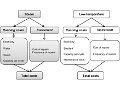
Editor's Note This Australian study finds it is a good economic decision for large healthcare facilities to invest in low-temperature systems for sterilization of steam-sterilizable endoscopes. Increased costs associated with low-temperature systems were outweighed by savings from fewer instrument repairs. Based on their calculations, the researchers estimated a savings of…

Editor's Note The Joint Commission on June 28 posted a Quick Safety on daily safety briefings--a hallmark of high reliability organizations. Safety briefings--also called safety huddles, daily check-ins, or daily safety calls--are used to give keep frontline staff and leadership informed. The briefings can be used to: share issues that…

Editor's Note For the third straight year, Boston Children’s Hospital tops the US News & World Report’s Best Children’s Hospitals Honor Roll. Children’s Hospital of Philadelphia was second, and Cincinnati Children’s Hospital Medical Center was third. US News bases its honor roll on how hospitals rank in each of 10…
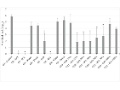
Editor's Note Treating contaminated surgical instruments with alcohol, allowing them to dry, or allowing them to soak in water for extended periods of time increases cleaning difficulty and may contribute to sterilization inefficacy, this study finds. Soaking or spraying instruments with alcohol significantly reduced viable bacterial numbers, but significantly increased…

Editor's Note Leading the Joint Commission’s Top Ten Challenging Standards for accredited ambulatory health care organizations during the past year was infection control standard IC.02.02.01, EP 2: The organization reduces the risk of infections associated with medical equipment, devices, and supplies by performing a high-level disinfection and sterilization. In 2016,…
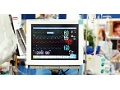
Editor's Note Researchers in the departments of anesthesia and biomedical engineering at Vanderbilt University have created a device that removes alarm sounds while preserving an ICU patient’s ability to hear human and environmental stimuli, notably speech. The in-ear device, which is worn by the patient, eliminates alarm sounds from the…

Editor's Note Techniques used to clean and sterilize flexible ureteroscopes left behind contamination that included debris, residue, and bacteria, in this study presented June 14 at the 44th Annual Conference of the Association for Professionals in Infection Control. Researchers with Ofstead & Associates (St Paul, Minnesota) sampled 16 ureteroscopes at…

Editor's Note The global market for gastrointestinal (GI) endoscopy devices is expected to see a compound annual growth rate of 5.09% through 2020, the June 13 Becker’s GI & Endoscopy reports. A large, growing patient pool is driving growth, but risks and complications tied to GI endoscopy procedures also will…
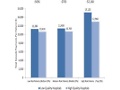
Editor's Note Medicare payments for bariatric surgery are significantly lower at hospitals with low complication rates, and cost savings are most prominent in patients at highest risk for complications, this study finds. The analysis of 38,374 bariatric surgery patients found a strong correlation between complication rates and episode payments−hospitals in…
Editor's Note The Food and Drug Administration (FDA) on June 9 released a list of reusable devices that will require new validated instructions for use (IFU) and validation data in premarket notifications regarding cleaning, disinfection, and sterilization. These actions are effective August 8, 2017. The list includes: Bronchoscopes (flexible or…


